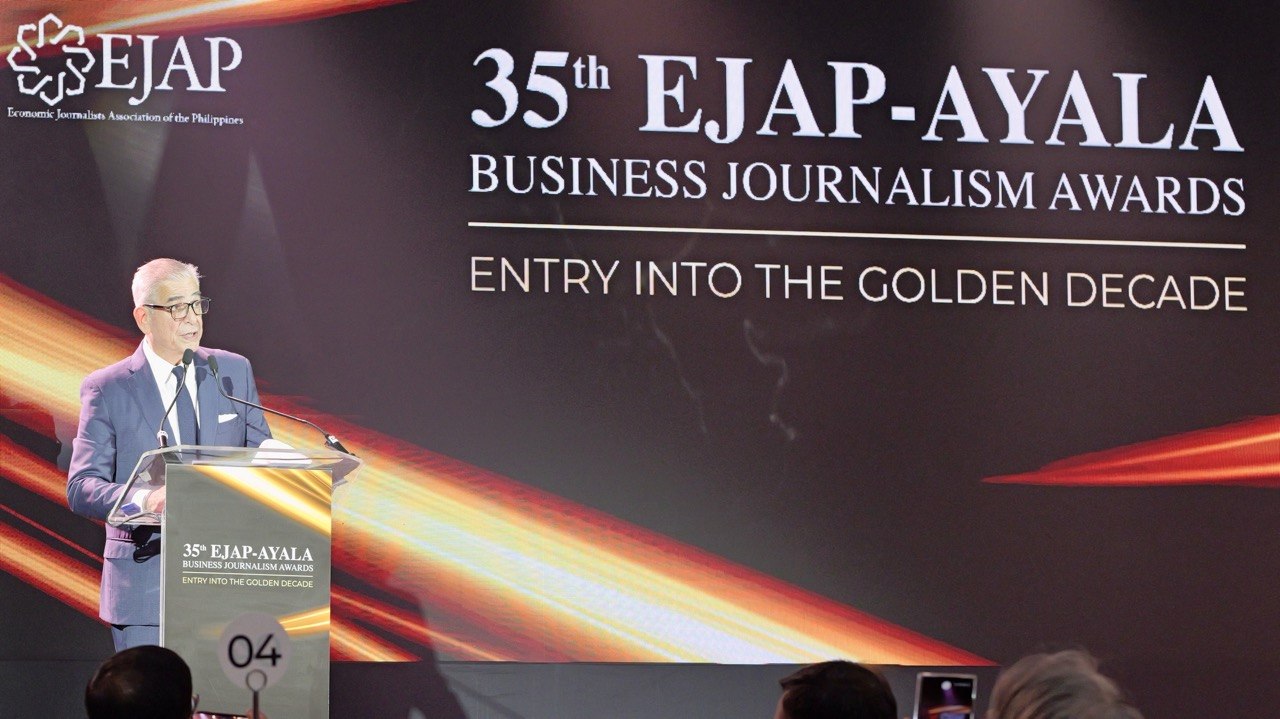
With only three in every 10 Filipinos trusting news most of the time and more than half avoiding it when they can, Ayala Corp. Chairman Jaime Augusto Zobel de Ayala has urged businesses and media to work together to restore public confidence in institutions, stressing the importance of independent journalism in shaping economic decisions and holding powerful players accountable.
Speaking at the 35th Economic Journalists Association of the Philippines (EJAP) Business Journalism Awards in Makati City on Friday, Zobel said rebuilding trust was a shared responsibility, particularly as political rhetoric and an increasingly fragmented information environment make it harder for credible reporting to reach audiences.
Citing the Reuters Institute Digital News Report, he noted that only 28 percent of Filipino respondents trusted news most of the time, while 51 percent avoided it if they could.
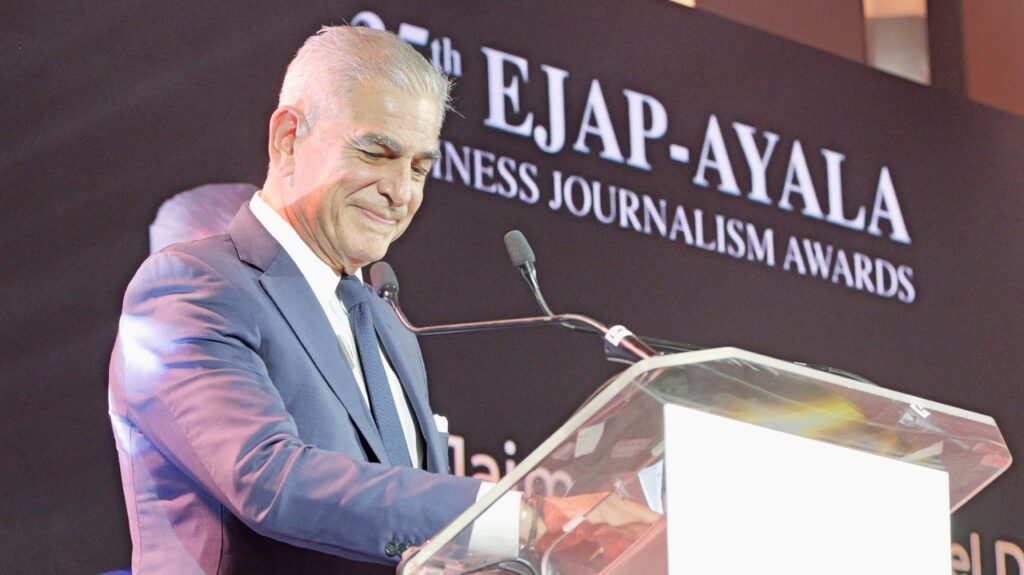
The figures make for uncomfortable reading, but Zobel cautioned against blaming newsrooms alone. He said the erosion of trust reflected broader disruptions in society, even as individual news brands retained their standing and Filipino journalists continued to demonstrate diligence and commitment.
The stakes for business are hardly academic. Corporate decisions affect thousands of employees, customers, investors, and communities, making independent journalism essential in explaining their consequences and holding institutions accountable.
“Independent journalism helps people understand the thinking behind these choices, assess their consequences, and keep institutions, including us in business, in check,” Zobel said.
Economic reporting also gives ordinary Filipinos a clearer view of how inflation eats into household budgets, interest rates influence housing and monetary flows, and investments translate into jobs and community development.
But accuracy alone is not enough. Zobel cautioned that even a correct headline, quotation, or statistic could create a misleading impression when stripped of context. The responsibility to inform fairly, he said, must extend to the conclusions audiences draw from what they read.
He also challenged companies to become more forthcoming, arguing that businesses should welcome scrutiny rather than treat journalists merely as conduits for corporate announcements.
“Journalists need room to ask difficult questions and reach independent conclusions, while businesses need to engage substantively,” he said.
That relationship becomes even more important as artificial intelligence, climate risks, shifting trade relationships, and the just transition reshape economic prospects. Companies can offer expertise, data, and access to decision-makers, while journalists can bring public concerns into boardroom conversations.
Zobel’s message was that business and media need not always agree. Their more important obligation is to help make institutions worthy of public confidence.
The billionaire, also popularly called by his initials JAZA, said that trust is not something that can be secured with a press release, an earnings presentation, or a particularly persuasive corporate slogan. It has to be earned, questioned, and continually demonstrated, he added.