
CHONGQING, China—If Tokyo feels too polished and Seoul too familiar, western China is ready to shake Filipino travelers out of their comfort zone in the best possible way.
The cities of Chongqing and Chengdu are loud, flavorful, occasionally confusing, and impossible to ignore. One serves cyberpunk skyscrapers with a side of tongue-numbing hot pot.
The other slows things down with sleepy teahouses and giant pandas rolling around like overfed house cats.
Together, they make a compelling case for ditching the usual Asian city checklist.
Chongqing looks like a city designed by someone who refused to believe gravity exists. Nicknamed China’s “5D” or “8D” city, it is stacked with bridges, tunnels, trains, and roads that seem to loop through mountains and apartment buildings with joyful disregard for urban planning logic.
“It’s a city that surprises first-time visitors,” said Ivan Olea, the Philippine consul general in Chongqing.
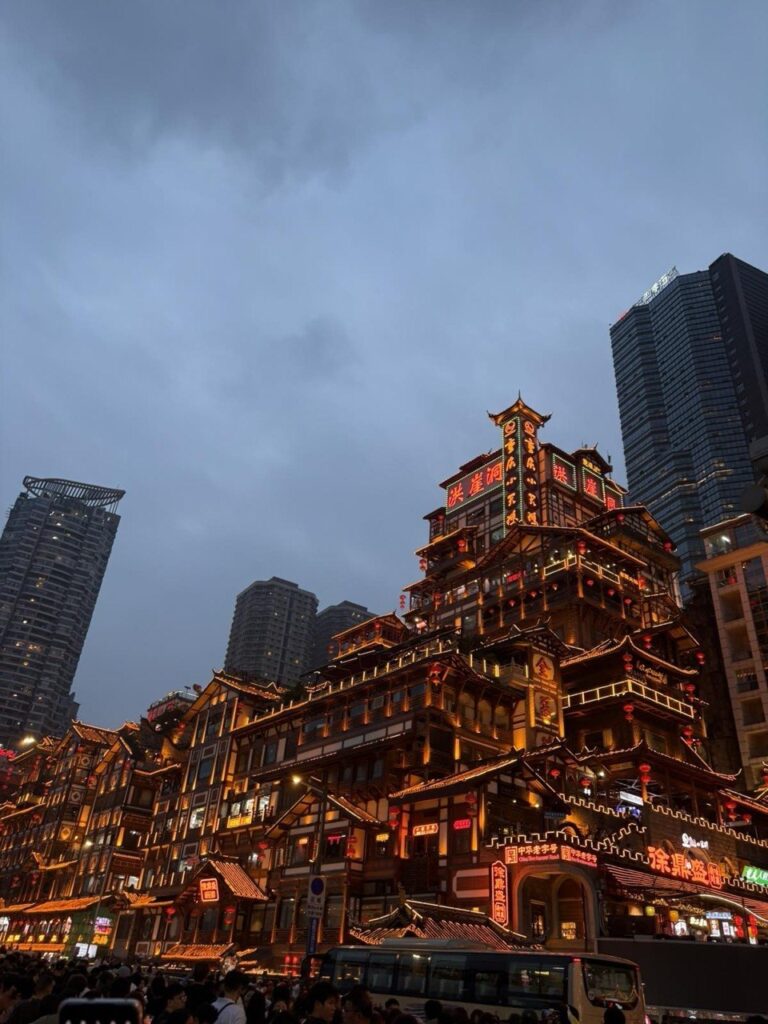
The most famous example is Liziba Station, where a train shoots straight through a residential building as casually as a jeepney squeezing through Manila traffic. Nearby, Hongya Cave glows at night like a movie set, its stilted structures overlooking the river in a blur of lanterns and neon reflections.
The city becomes even more dramatic after dark. A cruise along the Yangtze and Jialing rivers offers postcard-worthy views of the illuminated skyline and the gleaming Qiansimen Bridge.
It feels less like sightseeing and more like accidentally wandering into a futuristic video game.
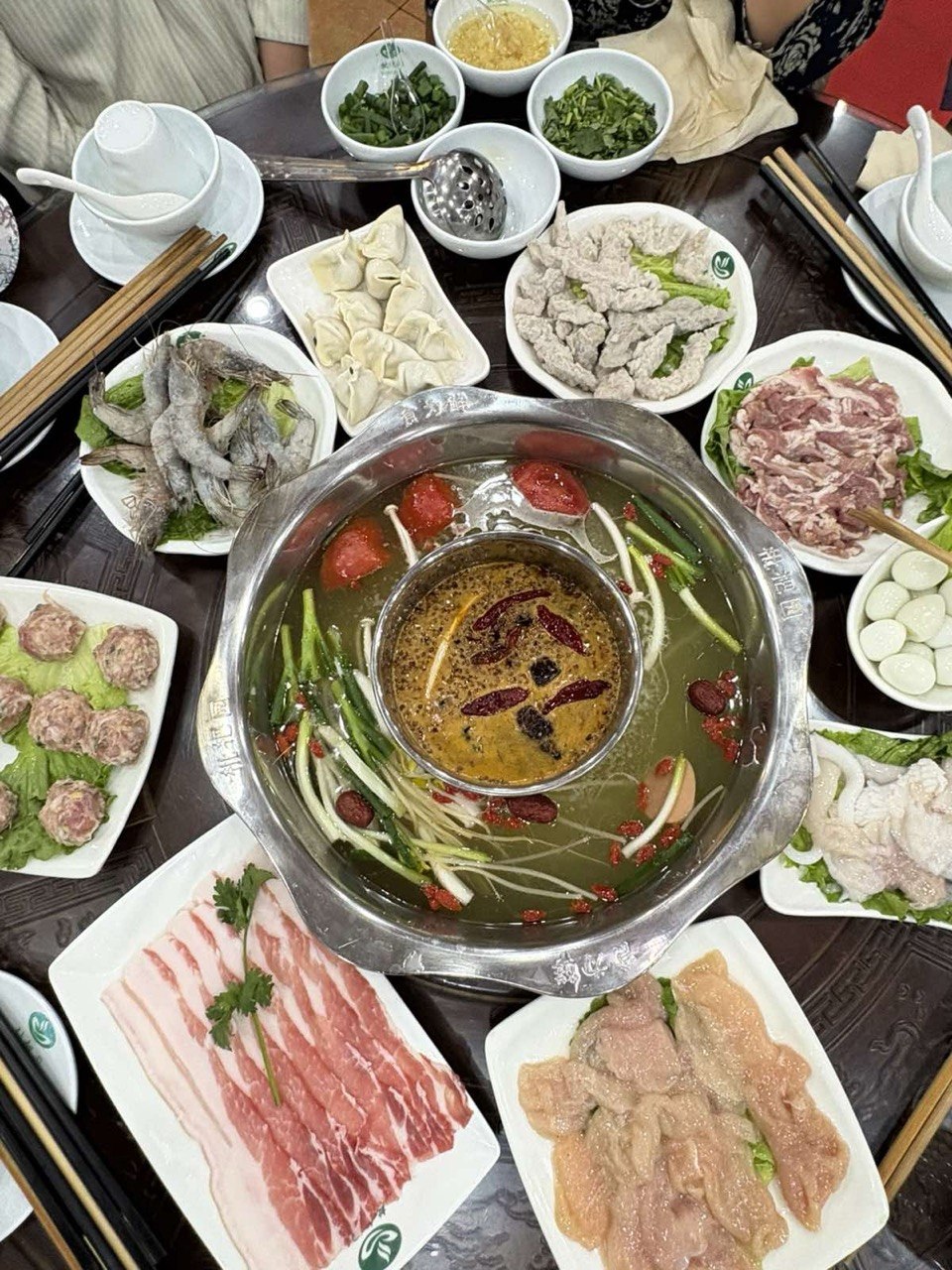
Then comes the food, which deserves its own warning label. Chongqing hot pot is spicy enough to make seasoned chili lovers question their life choices, yet locals somehow treat it like comfort food.
At Pipayuan Hot Pot, officially the world’s largest hot pot restaurant, thousands of diners gather nightly around bubbling pots of chili oil, meats, and vegetables.
Chengdu offers a gentler landing.
The Sichuan capital moves at a calmer pace, where afternoons revolve around tea, mahjong, and pandas. At Dujiangyan Panda Valley, visitors can watch giant pandas and rare red pandas lounging, climbing, and eating bamboo with admirable commitment to doing absolutely nothing productive.
Between Chongqing and Chengdu sits another surprise. Travelers can stop in Emeishan City to visit the historic Baoguo Temple and take a boat ride past the towering Leshan Giant Buddha carved into a cliffside centuries ago.
And because no Filipino trip is complete without shopping and snacks, Chongqing’s Jiefangbei Pedestrian Street and Chengdu’s Chunxi Road deliver both in excess. Think luxury stores beside street skewers, designer brands beside milk tea queues, and enough neon lights to convince anyone to stay out far too late.
The visit to these Chinese cities was part of a familiarization trip, organized with the support of the Philippine Travel Agencies Association. It is part of a broader effort to introduce Filipino travelers and travel agents to the emerging gems of western China, proof that the Silk Road still knows how to spark wanderlust. The initiative is also aimed at strengthening tourism exchanges between the Philippines and China, one hotpot, mountain view, and passport stamp at a time.

Irma Isip is a seasoned business journalist covering corporate developments, international trade, and economic trends. A University of Santo Tomas graduate, she spent over 15 years as Business Editor at Malaya Business Insight, delivering clear, insightful reporting on key market and industry developments.