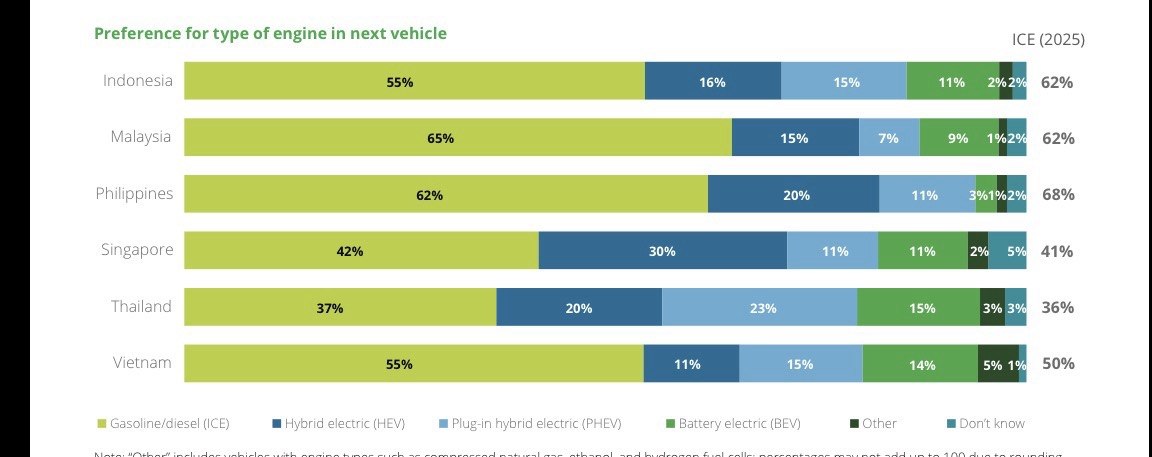
Filipino car buyers are showing increasing openness to switching brands and exploring alternative vehicle technologies, signaling a potential transformation in the country’s automotive market, according to Deloitte’s 2026 Global Automotive Consumer Study.
The survey, which included over 28,000 consumers across 27 markets, found that only 37 percent of Filipino respondents remain loyal to their current vehicle brand. Meanwhile, 31 percent are first-time buyers, reflecting a “high switching intent” among consumers who are more willing to consider new entrants and emerging technologies.
Interest in hybrid and electric vehicles (EVs) is rising sharply. Thirty-four percent of respondents expressed a preference for electrified vehicles, up from 27 percent in 2025. Lower fuel costs topped the list of reasons driving adoption at 62 percent, followed by environmental concerns at 49 percent and improved driving experience at 45 percent.
Despite growing interest, infrastructure concerns remain a barrier. Nearly half of respondents cited the lack of public charging stations as their primary worry, with battery replacement costs and charging time also flagged as major obstacles.
Beyond electrification, technology and connectivity are becoming central to Filipino car buyers. Most survey participants indicated willingness to pay for connected safety and maintenance features, especially emergency assistance and anti-theft tracking services.
Deloitte’s study also highlighted evolving priorities in vehicle selection. Consumers are increasingly selective, weighing vehicle performance, product quality, and pricing more heavily as they navigate a rapidly changing automotive landscape.
The findings suggest that automakers aiming to succeed in the Philippines will need to combine electrification with digital innovation while addressing practical barriers such as charging infrastructure. For the country’s automotive market, the shift could redefine consumer expectations and brand loyalty in the years ahead.