The Philippines’ freight and logistics industry is poised for sustained growth through 2031, fueled by the rapid expansion of e-commerce, infrastructure investments, and rising demand for faster and more specialized delivery services, according to research firm Mordor Intelligence.
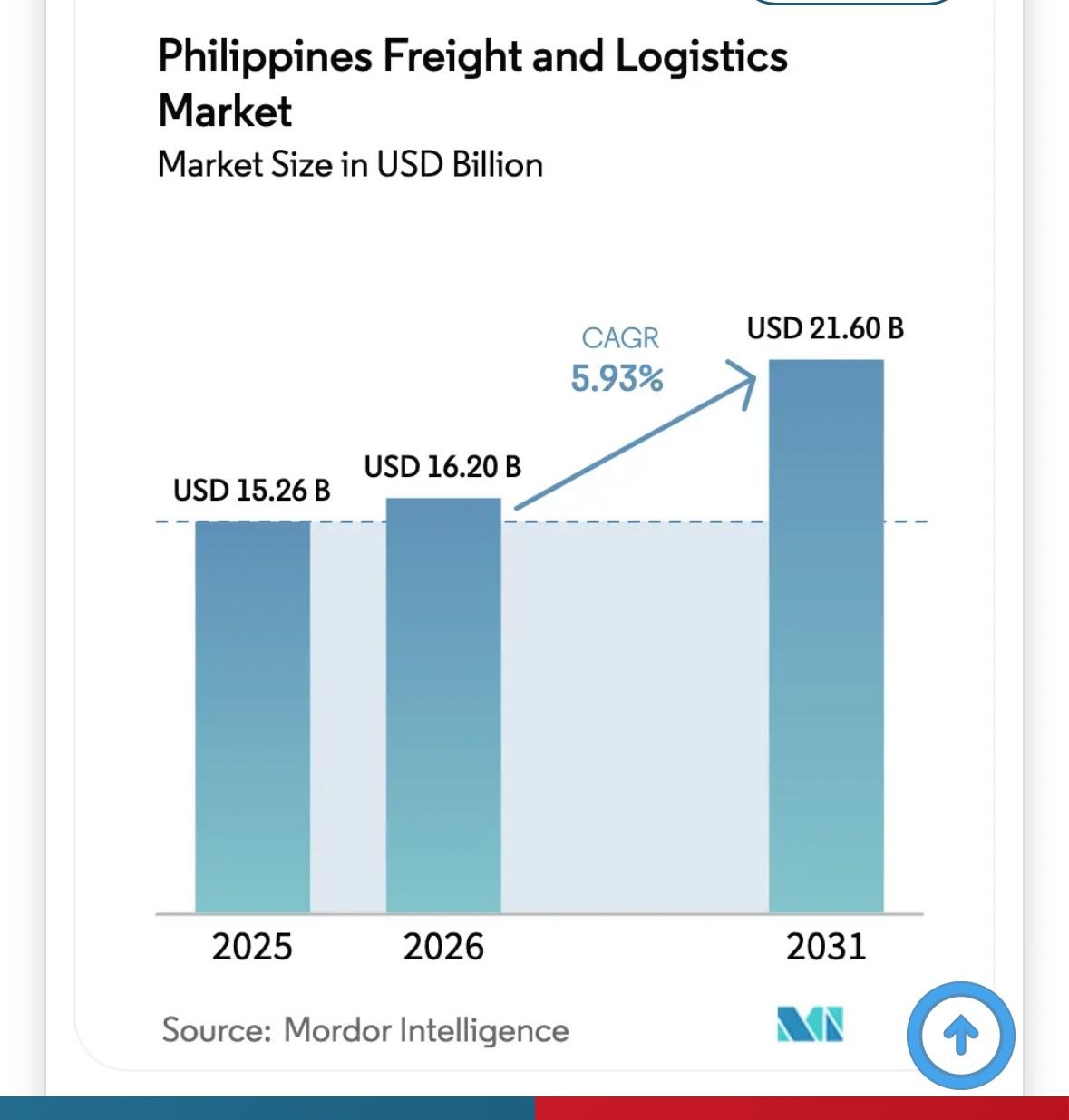
The industry, valued at USD15.26 billion in 2025, is projected to reach USD21.6 billion by 2031, reflecting a 5.93-percent compound annual growth rate (CAGR).
Courier, express, and parcel (CEP) services are expected to lead growth, expanding 6.82 percent annually from 2026 to 2031 as online shopping volumes continue to surge.
Wholesale and retail trade remained the sector’s largest end-user segment, accounting for 30.91 percent of the market in 2025, supported by the continued rollout of modern retail networks across the Visayas and Mindanao.
Air freight is likewise gaining traction, with annual growth projected at 7.55 percent amid rising electronics exports and pharmaceutical shipments that require faster delivery and stricter temperature controls.
Cold-chain logistics is also emerging as a key investment segment, with temperature-controlled warehousing forecast to grow 6.69 percent annually as demand for food and vaccine distribution increases.
Industry analysts said the sector’s expansion reflects the Philippines’ growing role in regional supply chains and the increasing reliance of businesses and consumers on digital commerce.
However, long-standing structural challenges continue to weigh on the industry. Congestion in Metro Manila, where traffic speeds average just 12 to 15 kilometers per hour during peak hours, continues to drive up operating costs and delay deliveries. Inter-island shipping rates also remain 30 to 40 percent higher than ASEAN averages due to limited competition among shipping operators.
The sector also remains exposed to climate-related disruptions, with recurring typhoons stranding cargo and highlighting gaps in insurance coverage and weather-resilient logistics infrastructure.