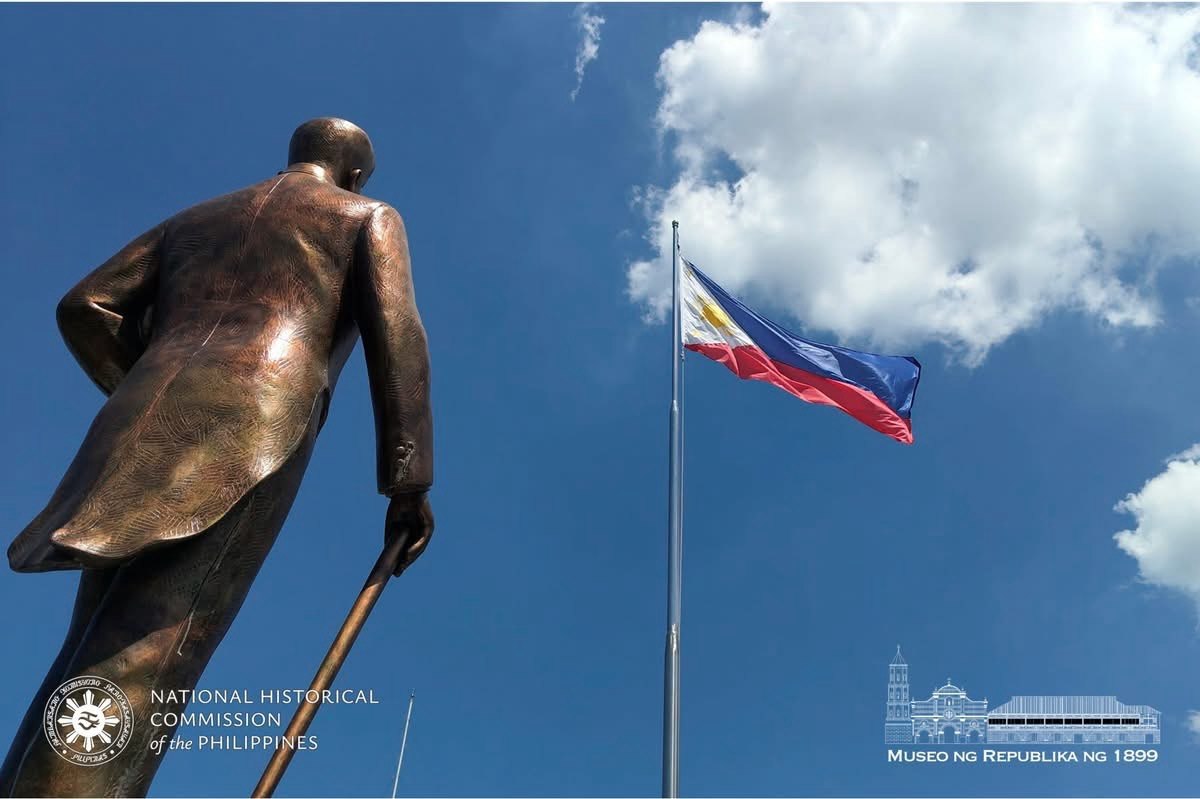
Every year, as red, white, blue, and yellow banners begin fluttering from homes, schools, government buildings, and even jeepneys, the Philippine flag quietly stages one of its most remarkable annual comebacks.
For most Filipinos, National Flag Days—from May 28 to June 12—mean seeing more flags than usual. But behind every ripple of fabric lies a story that stretches from battlefields and diplomatic missions to state funerals and everyday acts of patriotism.
The observance links two defining moments in Philippine history: the first unfurling of the national flag following the Filipino victory at the Battle of Alapan in Imus, Cavite on May 28, 1898, and the proclamation of independence by Gen. Emilio Aguinaldo in Kawit, Cavite on June 12 of the same year.
This year, historic sites managed by the National Historical Commission of the Philippines (NHCP) are marking the occasion with flag-raising ceremonies, exhibits, and the distribution of flaglets.
Yet the real star remains the flag itself—a piece of cloth that has spent more than a century collecting stories.
Among the artifacts featured in NHCP exhibits is the Williams-Dubois Flag, believed to have been linked to Aguinaldo’s efforts to win international recognition for the fledgling republic. Long before social media campaigns and diplomatic summits, the Philippine flag was already doing public relations work on the world stage.
Other preserved flags tell stories of a nation navigating changing political tides, from colonial rule to the internationally recognized independence achieved in 1946.
Some of the most moving stories, however, come from moments of farewell. Flags that draped the coffins of former President Manuel L. Quezon and former Interior Secretary Jesse Robredo demonstrate how the banner continues to symbolize service, sacrifice, and nationhood.
More than a historical artifact, the Philippine flag remains a living companion to the country’s journey.
Every June, it leaves museums and history books and returns to where it arguably belongs most—in public view, reminding Filipinos that independence was won, not given, and that nationhood is still very much a work in progress.