The Philippines may have escaped the worst of Washington’s latest tariff offensive, giving exporters a relative edge over regional competitors even as global trade tensions continue to escalate.
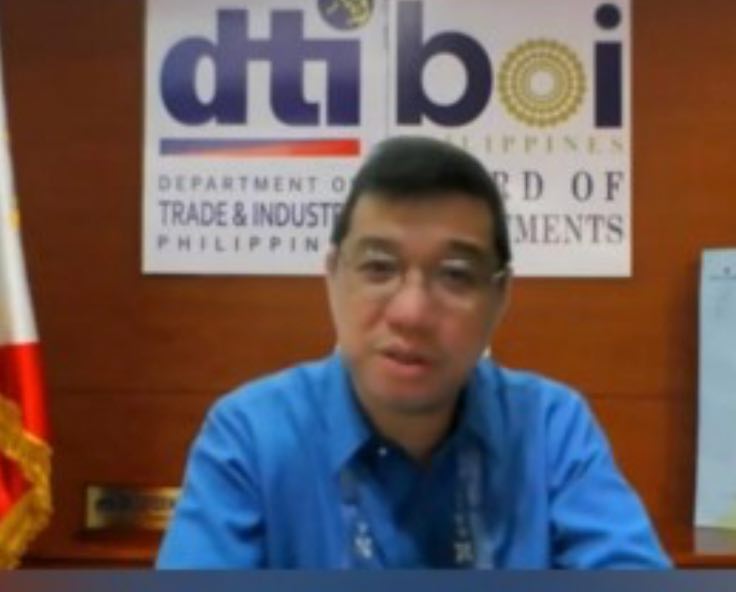
Trade Undersecretary Ceferino Rodolfo said only 34.28 percent of Philippine exports to the US, equivalent to about USD6.25 billion based on 2025 trade data, will be covered by the new 12.5 percent Section 301 tariff tied to forced labor concerns.
More than 60 percent of exports, or roughly USD11.98 billion, remain exempt.
“We’re not in a bad situation, not at all, but we want the best for our exporters,” Rodolfo said.
The numbers put the Philippines in a stronger position than many of its Southeast Asian peers.
Rodolfo noted that Indonesia faces tariff exposure of about 83 percent of its exports to the US, while Malaysia’s exposure is around 40 percent.
The Philippines’ export mix, which remains heavily anchored on semiconductors and other exempt products, has helped cushion the impact.
Another competitive advantage lies beyond the tariff itself. While the Philippines is among the economies covered by the US Section 301 investigation on forced labor, it remains outside the separate Section 301 probe into excess industrial capacity, an investigation that could pave the way for another round of tariffs on other Asian exporters.
“All of our neighbors and competitors are there,” Rodolfo said, referring to Indonesia, Malaysia, Vietnam and Thailand. “The 12.5 percent seems now to be our ceiling.”
Export Marketing Bureau Director Bianca Sykimte said exempt products include semiconductors, automotive parts, aircraft components, coconut and pineapple products, bananas, mangoes, cassava, taro, pastries, biscuits and key mineral exports.
Still, officials are not treating the current outcome as the finish line. Rodolfo said the government will continue engaging the Office of the US Trade Representative to seek lower or zero tariffs on the remaining covered exports, aiming to preserve the country’s competitive advantage in its largest export market.