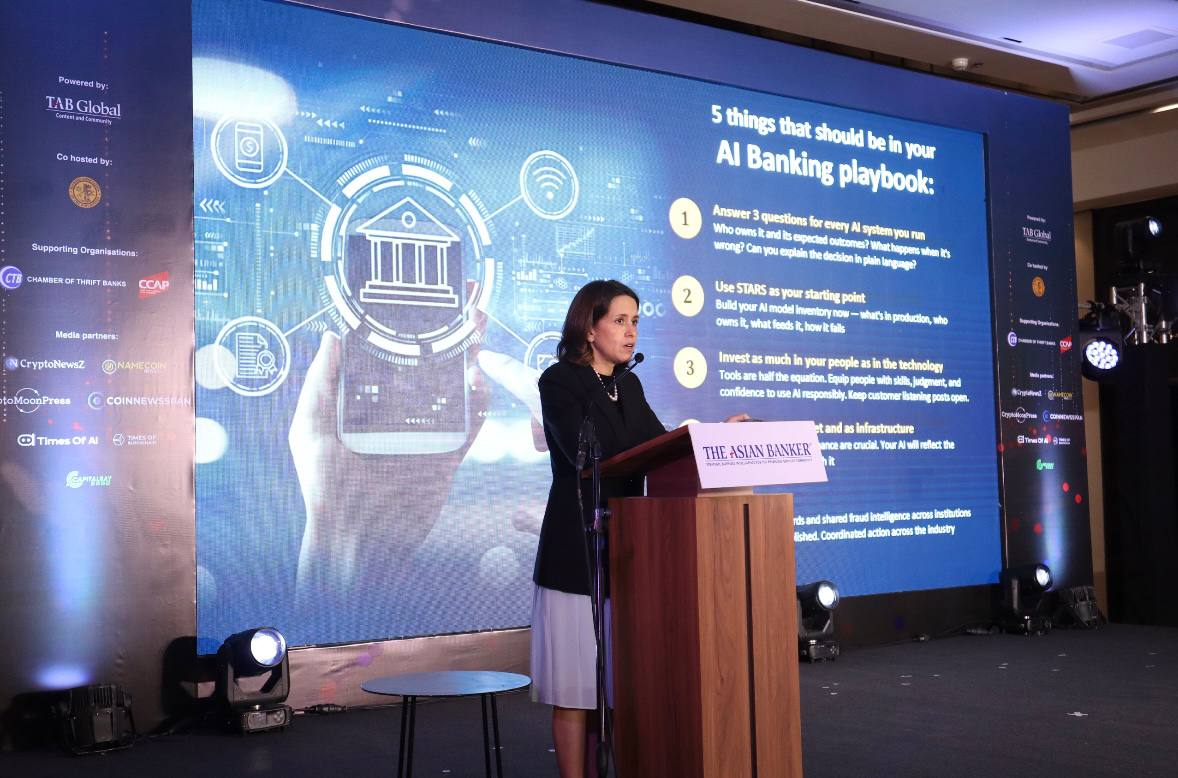
The Bankers Association of the Philippines (BAP) and The Asian Banker recently convened senior leaders from across the financial sector for Finance Philippines 2026, bringing together regulators, traditional and digital banks, fintech firms, technology providers, and corporations to discuss key shifts reshaping the country’s financial system. Held at Seda Hotel BGC in Taguig City, the event carried the theme “The Operating Playbook for AI Banking,” and focused on practical steps for an industry evolving alongside advances in artificial intelligence, digital money, and greater financial connectivity. Discussions covered not just technological possibilities, but also how firms can turn innovation into tangible results while upholding security, sound governance, operational reliability, and public trust.
“The question before us is no longer whether artificial intelligence will matter to banking. The question is whether we will build the organizations, safeguards, capabilities, and ways of working needed to use it well,” said Ana Aboitiz Delgado, president and CEO of UnionBank and BAP president. “So the real question is not whether AI will become part of banking, it is when AI becomes as indispensable as the internet, which institutions would have built it properly, and which ones would be scrambling to catch up.”
The conference centered its discussions on this core challenge, with sessions exploring the business case for AI in banking, autonomous AI systems, robust infrastructure for real-world AI use, AI applications in addressing fraud, and the broader effects of integrating AI across banking operations.
As the Philippine financial sector enters a period of rapid technological and structural change, Aboitiz Delgado emphasized that accountability and cooperation are essential to ensuring innovation supports sustainable and inclusive growth.
“The central point here is that accountability remains with the institution. It does not move to the vendor, the model, or to the technology team, the bank and the bankers need to own their outcomes. Every AI system in production should therefore have a named owner, a clear governance chain, and a documented failure role,” she noted.
“My favorite advocacy is, we must collaborate as an industry. We need common standards and stronger sharing, especially in fraud intelligence. Fraud networks do not recognize institutional boundaries. In an interconnected financial system, one’s institution vulnerability can quickly become a wider problem, and our defenses must therefore be coordinated. For the Philippines, the opportunity is not only about efficiency; it’s also about inclusion,” she added.
Through its support for Finance Philippines 2026, the BAP restated its commitment to encouraging open discussion and cooperation across the financial services ecosystem, and to helping build a more innovative, resilient, and forward-looking Philippine banking industry.