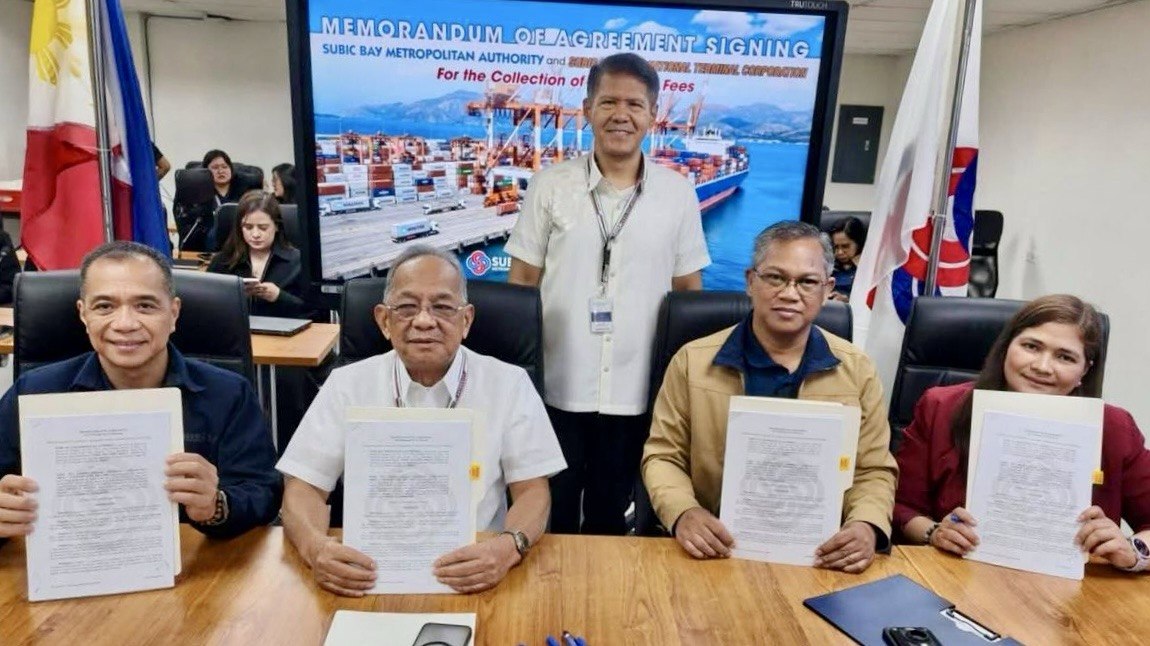
The Subic Bay Metropolitan Authority is handing a key port payment function to private operator Subic Bay International Terminal Corp., aiming to make fee collection faster and less cumbersome for businesses using the Port of Subic.
Under a new agreement, SBITC will collect wharfage fees on behalf of SBMA through its online payment platforms, allowing port users to settle charges without making a separate trip to the agency’s cashier.
SBITC, a subsidiary of International Container Terminal Services Inc., operates New Container Terminals 1 and 2 at Subic. SBMA last year extended SBITC’s concession by 25 years, allowing the company to operate the terminals until 2058.
SBMA Chairman and Administrator Eduardo Jose L. Aliño and SBITC Head of Management Services and Government Affairs Henry Dungca signed the memorandum of agreement on July 29.
The arrangement puts the collection process in the hands of the terminal operator while leaving SBMA in charge of the regulatory framework within the Subic Bay Freeport Zone.
“This arrangement will minimize face-to-face interactions, eliminate the need for clients to travel to SBMA’s cashier, and reduce waiting times for fee processing. Ultimately, it simplifies doing business at the Port of Subic,” Aliño said.
The change also gives SBMA a more streamlined channel for collecting revenues that support port operations, infrastructure, and future investments.
Aliño said the initiative fits into broader plans for the Luzon Economic Corridor, which aims to link Subic, Clark, Manila, and Batangas into a more integrated trade and logistics network.
For SBITC, the new role comes with an accountability requirement. Dungca said the company will ensure transparent and accountable remittances of wharfage fees collected for SBMA while speeding up transactions for port users.
The collection setup is not entirely new to Philippine ports. SBMA said it follows a model used by the Philippine Ports Authority, where private port operators collect government fees on behalf of the state.
For importers, exporters, and other port users, the change amounts to a small but potentially useful piece of logistics reform. One less cashier window to visit can mean one less delay in moving cargo.