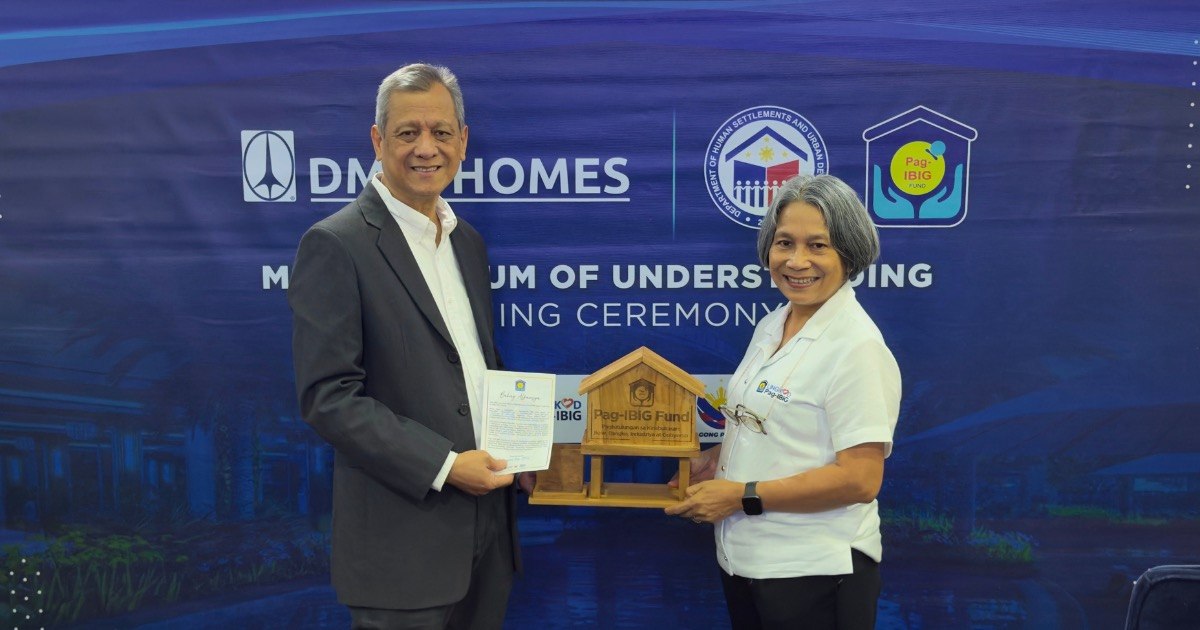
DMCI Homes has entered the government’s Expanded Pambansang Pabahay Para sa Pilipino (4PH) Program through a partnership with Pag-IBIG Fund, opening a potential new financing pathway for homebuyers, beginning with its Anissa Heights condominium development in Pasay City.
Formalized on October 16, the agreement is expected to make up to 3,990 condominium units eligible for Pag-IBIG housing financing once accreditation of additional DMCI Homes projects is completed. Anissa Heights, a pre-selling residential development along P. Zamora Street, is the first project accredited under the partnership.
Fourteen other developments are undergoing accreditation, including Allegra Garden Place, The Erin Heights, The Oriana, Verdon Parc, Alea Residences and Cypress Towers. Their inclusion would broaden the range of condominium options potentially available to qualified buyers, although financing access will depend on individual eligibility and project accreditation.
Pag-IBIG members may apply for housing loans of up to P10 million, subject to the fund’s requirements and borrowers’ repayment capacity. The program also allows applicants to combine incomes with up to two co-borrowers, including individuals who are not relatives, potentially helping households meet affordability requirements.
Pag-IBIG Fund CEO Marilene Acosta said the partnership would expand housing choices for members, with the projected unit count contingent on completing the necessary accreditations.
For DMCI Homes, President Alfredo Austria said the agreement reinforces the developer’s commitment to making quality housing more accessible, particularly to middle-income Filipino families. The company is also exploring opportunities in socialized housing as part of its longer-term response to the country’s housing backlog.
The arrangement reflects the government’s broader strategy of engaging private developers to increase housing supply while using public financing mechanisms to help buyers purchase homes.
However, expanded loan access does not automatically make every unit affordable for every household. Actual affordability will depend on selling prices, loan terms, income qualifications and the borrower’s ability to sustain repayments.
The partnership’s broader impact will therefore hinge on how quickly additional projects secure accreditation and whether eligible buyers can translate financing availability into sustainable homeownership.