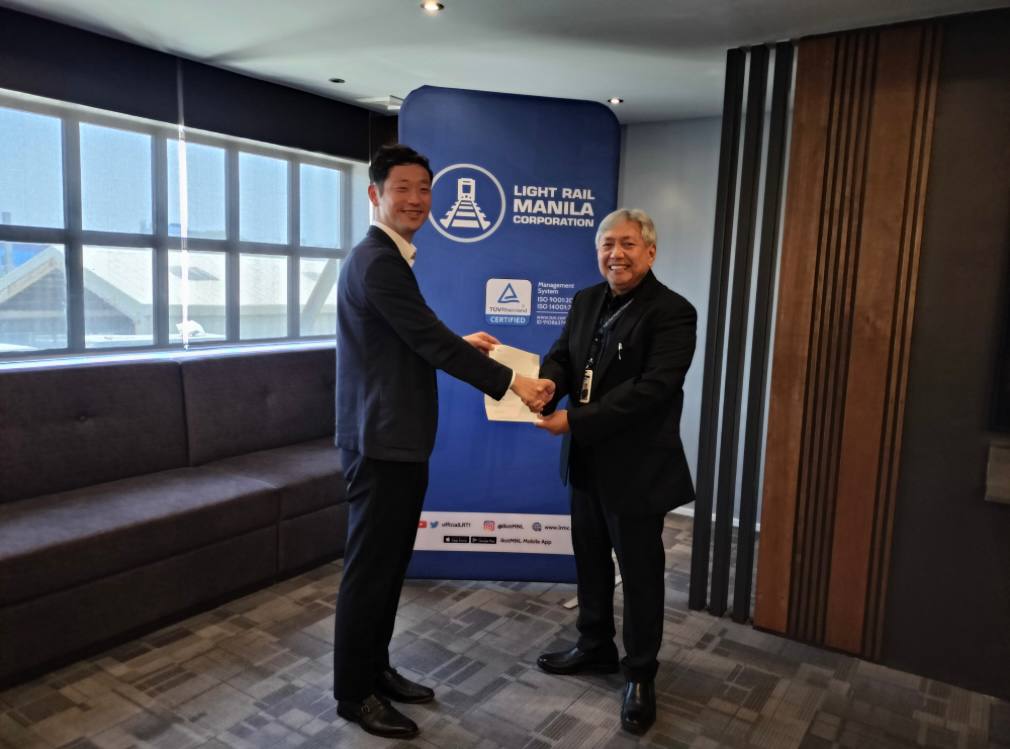
The Japan International Cooperation Agency (JICA) has concluded its technical assistance program for the Light Rail Manila Corporation (LRMC), focused on advancing energy conservation along Light Rail Transit Line 1 (LRT-1).
Launched in July 2025, the initiative aims to boost operational efficiency, cut electricity expenses, and lower greenhouse gas emissions — supporting the country’s goal of building sustainable urban transport systems.
As part of the program, Japanese specialists conducted a thorough review of LRT-1’s infrastructure. Their analysis showed that traction power — the energy needed to operate the trains — makes up more than 80 percent of the line’s total electricity use. The study also identified a key area for improvement: significant loss of regenerative energy, caused by current system limitations and operational practices. This finding points to clear potential for reducing both costs and emissions through better technology and procedures.
To address these gaps, the team proposed a step-by-step approach combining quick, low-cost operational changes with long-term infrastructure improvements. The plan is laid out in a new medium-to-long-term roadmap covering 2026 to 2035, giving LRMC a clear guide to roll out energy-saving measures systematically. The effort also supports the Philippine government’s commitment under the Paris Agreement to cut carbon emissions by 2030.
Completed during the 70th anniversary of diplomatic ties between the Philippines and Japan, the program sets a benchmark for greener public transport in the country. It follows JICA’s earlier partnership in 2025 with Sumitomo Corporation and Hankyu Corporation under the Private Sector Investment Finance scheme, which helped strengthen LRT-1’s operations and maintenance.
Moving ahead, JICA said it will continue to share Japan’s advanced railway energy management solutions and technical know-how to help develop sustainable infrastructure across the Philippines.