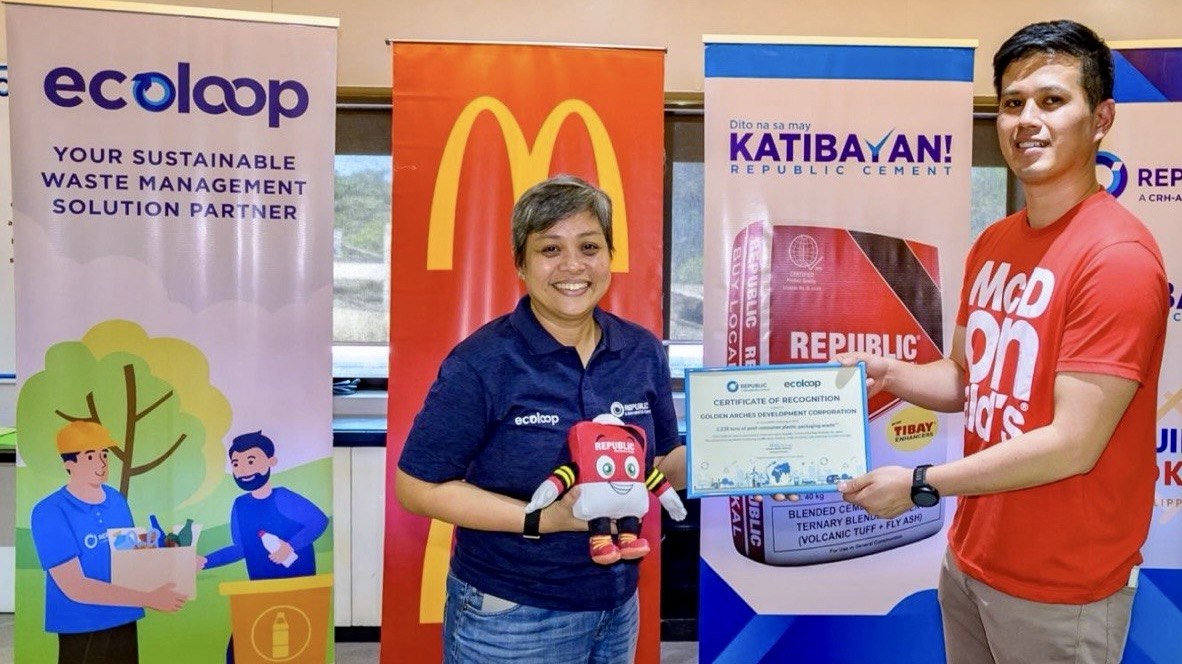
What happens to plastic waste after the last burger is served and the dining tables are cleared? McDonald’s Philippines wants the answer to be something more productive than a trip to the landfill.
The fast-food giant is expanding its sustainability efforts through a partnership with ecoloop, the resource recovery arm of Republic Cement, turning plastic waste generated across its restaurant network into alternative fuel for cement manufacturing. The initiative gives discarded plastic a second life while helping address one of the country’s most persistent environmental challenges.
Under the arrangement, plastic waste collected from McDonald’s stores will be diverted from sanitary landfills and co-processed at Republic Cement facilities. Instead of becoming a long-term waste problem, the material will help power energy-intensive cement production.
The partnership arrives as companies face increasing pressure to comply with the Extended Producer Responsibility Act of 2022, which requires large enterprises to recover and manage a growing portion of the plastic packaging they introduce into the market. While compliance is a regulatory requirement, it is also becoming a competitive differentiator as consumers and investors place greater value on sustainability commitments.
“At ecoloop, we believe sustainability is achieved through collaboration,” said Angela Edralin-Valencia, director of ecoloop.
McDonald’s Philippines says environmental stewardship has become an integral part of its business model. Across its more than 850 stores nationwide, the company has rolled out initiatives ranging from solar rooftops and rainwater harvesting systems to eco-friendly construction materials and sustainable packaging.
The latest waste-to-fuel project complements the company’s broader Green & Good program and its ReClassified initiative, which transforms retired restaurant furniture into classroom chairs and tables.
Beyond reducing waste, the partnership illustrates a growing shift toward circular economy practices, where materials are kept in productive use rather than discarded. In business terms, yesterday’s trash is increasingly becoming tomorrow’s resource, and companies that learn to close the loop may find both environmental and economic gains waiting on the other side.