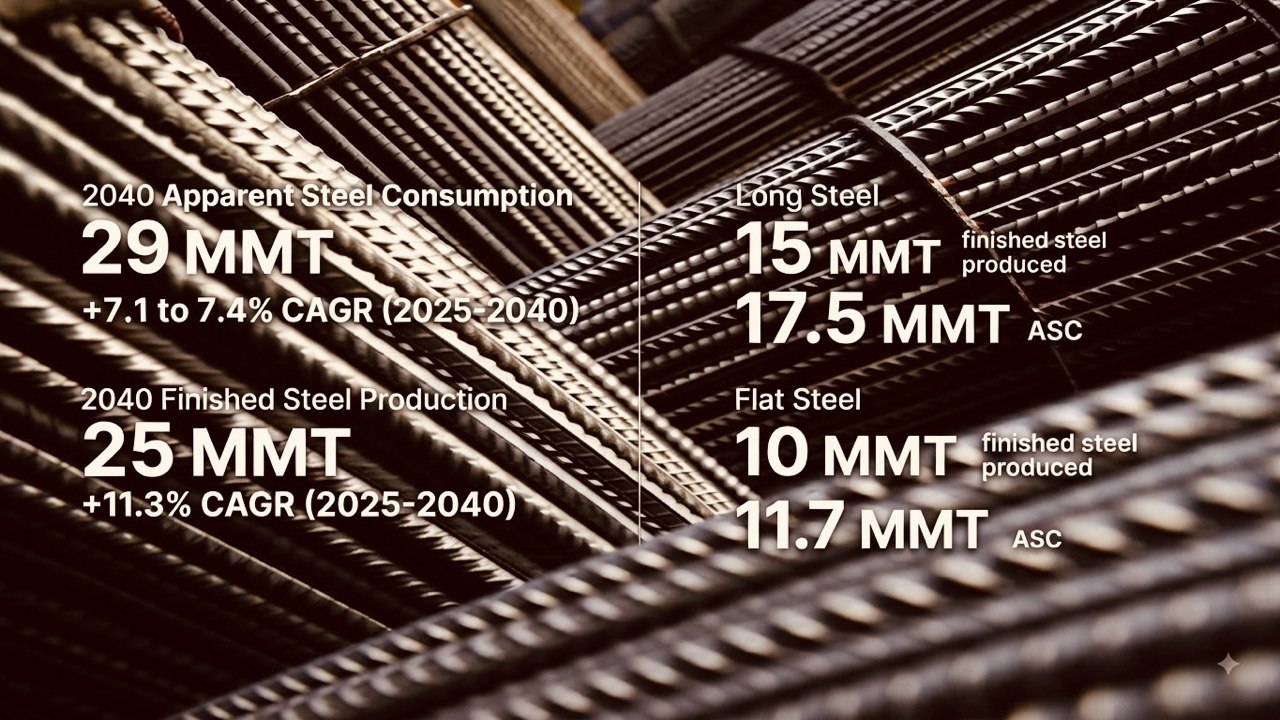
The Philippine steel industry is targeting P1 trillion in finished steel production and 86 percent self-sufficiency by 2040 under a new industry roadmap designed to strengthen domestic manufacturing and reduce the country’s reliance on imports.
The 2026–2040 Philippine Iron and Steel Industry Roadmap projects apparent steel consumption to more than double, from 14 million metric tons (MMT) in 2026–2030 to 29 MMT by 2036–2040.
Domestic production is targeted to rise from 8.5 MMT to 25 MMT over the same period, lifting industry self-sufficiency from 61 percent to 86 percent.
The roadmap calls for a 60:40 mix of long and flat steel, supported by strategic imports, backward integration in flat steel, expanded mills, and modernization of production facilities.
By 2040, the industry is expected to generate P1 trillion in finished steel output and USD 11.5 billion in foreign exchange savings, while strengthening domestic supply chains.
The Philippine Iron and Steel Institute (PISI) said the roadmap focuses on three priorities, industrial competitiveness, sustainability, and stronger standards to protect the integrity of infrastructure.
PISI President Joel Ronquillo said the plan aims to expand local production while promoting green steel technologies and cleaner manufacturing processes.
“The growth of the industry should not come at the expense of the environment,” Ronquillo said, emphasizing the need to balance industrial expansion with sustainability.
He also called on manufacturers, builders, policymakers, and consumers to work together to translate the roadmap’s targets into actual investments and policy reforms.
PISI Immediate Past President Ronald Joel C. Magsajo described the roadmap as a “seal of confidence for the Philippines” and credited the Board of Investments (BOI) for its role in developing the blueprint.
The BOI said the roadmap provides a common direction for government and industry to address supply-chain gaps, improve competitiveness, expand domestic production, and accelerate sustainable technologies.
Beyond steel itself, the targets could strengthen downstream manufacturing and construction, making the industry a bigger pillar of the Philippines’ broader industrialization strategy.