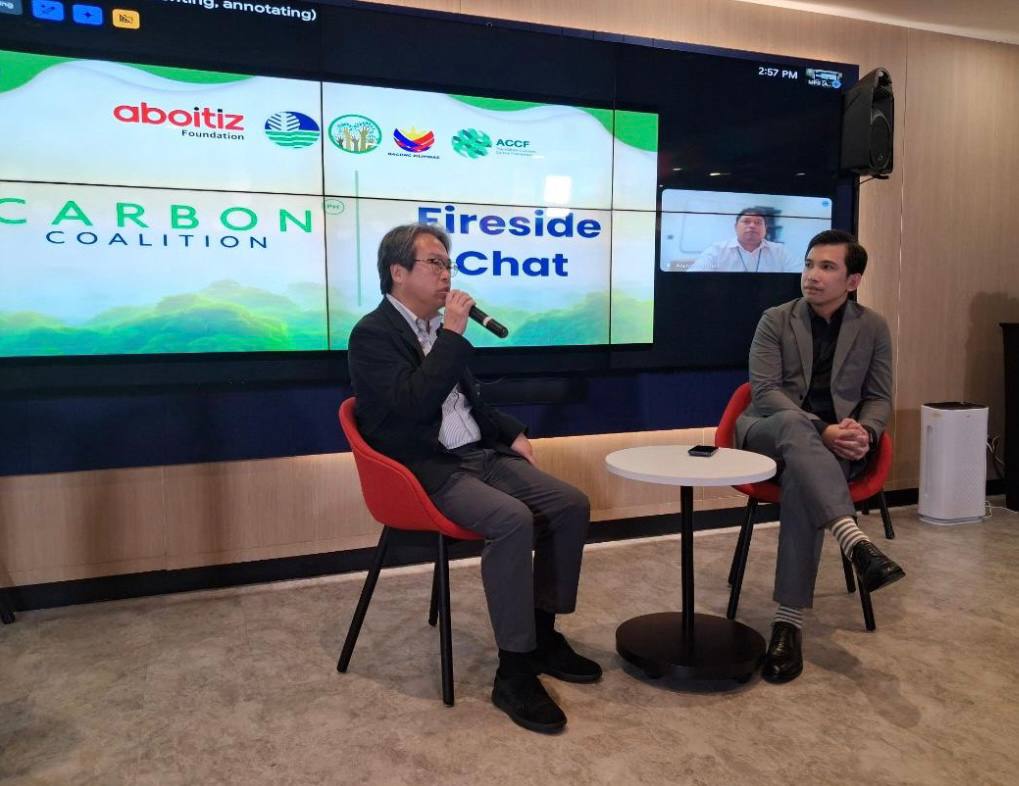
The Philippines is moving beyond reliance on public funds and grants for forest restoration, laying down clear frameworks to draw sustained private sector investment into nature-based solutions and build a robust, investable forest carbon market. This transition took center stage at the recent CarbonPH Coalition Education Series, hosted by Aboitiz Equity Ventures, a lead convenor of the CarbonPH Coalition—an alliance of the country’s top businesses advancing nature-based climate action.
During the session, Department of Environment and Natural Resources Forest Management Bureau assistant director Ray Thomas Kabigting outlined key measures designed to strengthen project registration, establish accurate carbon baselines, and roll out reliable monitoring systems. These include developing a dedicated registry to track forest carbon projects and projected credits, as well as mapping areas with strong project potential. The bureau has also made its National Forest Monitoring System fully operational and rolled out satellite-based monitoring capabilities to ensure transparency and accountability. Kabigting emphasized that the agency is now actively integrating financial and commercial logic into forest policy, moving away from frameworks rooted solely in forestry science toward policies that align with business models and investment realities. He noted the bureau is ready to engage the private sector at scale, speaking the same language of financing and balance sheets to create policies that work for both conservation and commerce.
AEV first vice president and chief reputation and sustainability officer Ginggay Hontiveros-Malvar stressed that mobilizing capital must go hand in hand with upholding the highest standards of market integrity. She emphasized that a credible carbon market must deliver measurable climate benefits, operate with transparency, and create lasting value for forest ecosystems, local communities, and those who depend on and protect these landscapes. The event brought together policymakers, business leaders, carbon market experts, and regional stakeholders to link domestic policy developments with the evolving carbon market architecture across Southeast Asia.
Discussions also covered the country’s growing role in the ASEAN Common Carbon Framework, where the Philippines currently holds observer status. The regional initiative aims to harmonize standards, strengthen supply integrity, boost demand, and improve interoperability across national carbon markets, aligning the region with globally recognized benchmarks. Regional speakers noted that Southeast Asia is well positioned to generate high-quality carbon credits that carry a premium, with the Philippines cited for strong potential given its skilled workforce and cost competitiveness in forest management—though experts also noted that further improvements in data and digital infrastructure will be key to fully realizing that advantage.
As the DENR advances from market preparation to active implementation, and ASEAN moves toward greater regional connectivity, the CarbonPH Coalition will continue to bridge policy, capital, and expertise to turn emerging frameworks into credible, real-world investments. This vision is already being put into practice through the CarbonPH initiative, Aboitiz Foundation’s flagship 40-year commitment to restore and protect 71,000 hectares of forest landscape across Cebu, combining long-term stewardship, community participation, and science-based restoration to deliver lasting environmental and social value.