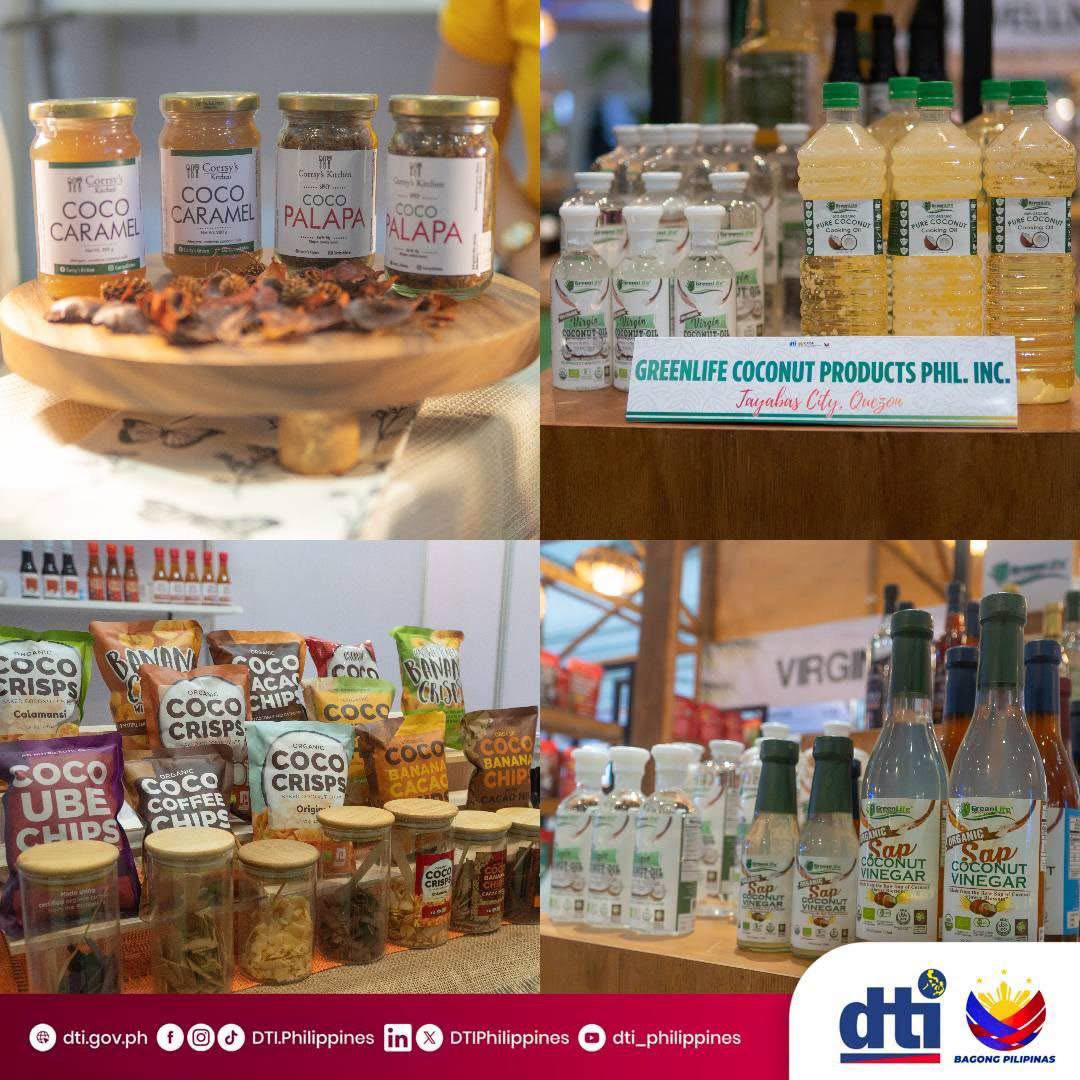
The Philippine coconut industry is emerging as a major export growth driver, with shipments surging 34 percent to USD3.6 billion in 2025 as the government seeks to capture more global demand for higher-value coconut products.
The Department of Trade and Industry (DTI) said coconut products accounted for nearly half of the country’s agro-based exports last year and contributed to record total export revenues of USD84.48 billion.
The industry also supports about 2.8 million Filipino farmers, making higher-value production a key opportunity to raise rural incomes while creating jobs across processing, manufacturing, and trade.
“The value of our coconut industry lies not only in what we harvest, but in what we create from it,” Trade Secretary Ma. Cristina Roque said at the DTI–Bagong Pilipinas COCONUTPhilippines Trade Fair.

“We must maximize its potential by producing competitive, high-value products that generate lasting income for our farmers and local communities,” she added.
To sustain the export momentum, the DTI is expanding international business matching, outbound trade missions, and buyer connections through Philippine Trade and Investment Centers overseas.
About 300 micro, small, and medium enterprises participating in the trade fair are also being positioned for product development, direct market linkages, and commercial partnerships, complementing assistance under the Coconut Farmers and Industry Development Plan.
Exporters could gain additional market access from the Philippines’ expanding trade arrangements, including the recently concluded negotiations for a free trade agreement with Chile and ongoing talks with the European Union and Canada.
Roque said the strategy is to turn the global reputation of Philippine coconut products into stronger enterprises, better incomes for farmers, and more jobs.
With exports already posting strong growth, the government is betting that processing more coconut into competitive, higher-value products can make the industry an even bigger contributor to Philippine trade while spreading more of its gains across coconut-growing communities.