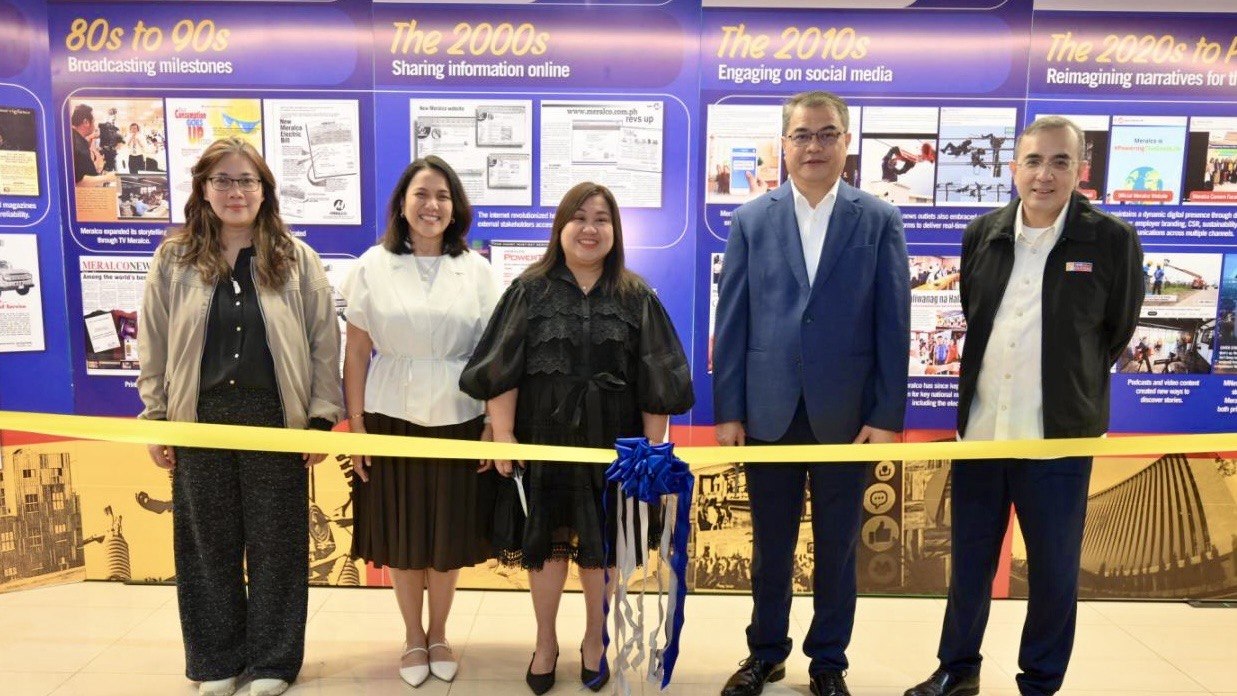
Manila Electric Co., the listed power company led by Manuel V. Pangilinan and more popularly-known as Meralco, has launched its own media and information literacy initiative, urging employees and stakeholders to apply greater scrutiny to the information they consume and share as misinformation becomes harder to separate from legitimate news.
Called Mapanuring Meralco, the initiative was launched in line with UNESCO’s Global Media and Information Literacy Week, held from Oct. 24 to 31. It seeks to promote responsible communication and critical thinking as information moves faster across increasingly fragmented digital platforms.
Meralco Vice President and Head of Corporate Communications Joe R. Zaldarriaga said the initiative also traces how the power distributor’s communication practices have evolved alongside changing technologies.
“We join the global observance of UNESCO’s Global Media and Information Literacy Week, which reminds us of the shared responsibility we have in building a more informed and discerning society,” Zaldarriaga said.
As part of the launch, Meralco unveiled Mapanuring Meralco: Wired Through the Years, an exhibit documenting the company’s communication channels, from traditional print materials to digital platforms. It highlights how Meralco has communicated with employees, customers and the broader public across generations.
The company earlier joined THINKaMunaPilipinas, a media and information literacy advocacy program led by MediaQuest Holdings Inc.
Meralco also held its first Media and Information Literacy Forum on Oct. 30, bringing together employees and stakeholders to discuss responsible information consumption and critical thinking.
Hans Montenegro, Meralco first vice president and chief human resources officer, said trust remains central to the company’s relationship with its 8.3 million customers.
“As employees and communicators of important information, we all play a critical role in protecting that trust,” Montenegro said.
Meralco Executive Vice President and Chief Operating Officer Ronnie L. Aperocho said technology, algorithms and artificial intelligence have fundamentally changed how people receive information and form opinions.
“Truth is no longer just something we know. We must actively protect it,” Aperocho said, urging employees and stakeholders to choose facts over noise and integrity over convenience.
For a utility serving millions of customers, the message carries a practical dimension. In an environment where information can reach millions of screens within seconds, getting the facts right is increasingly part of maintaining public trust.