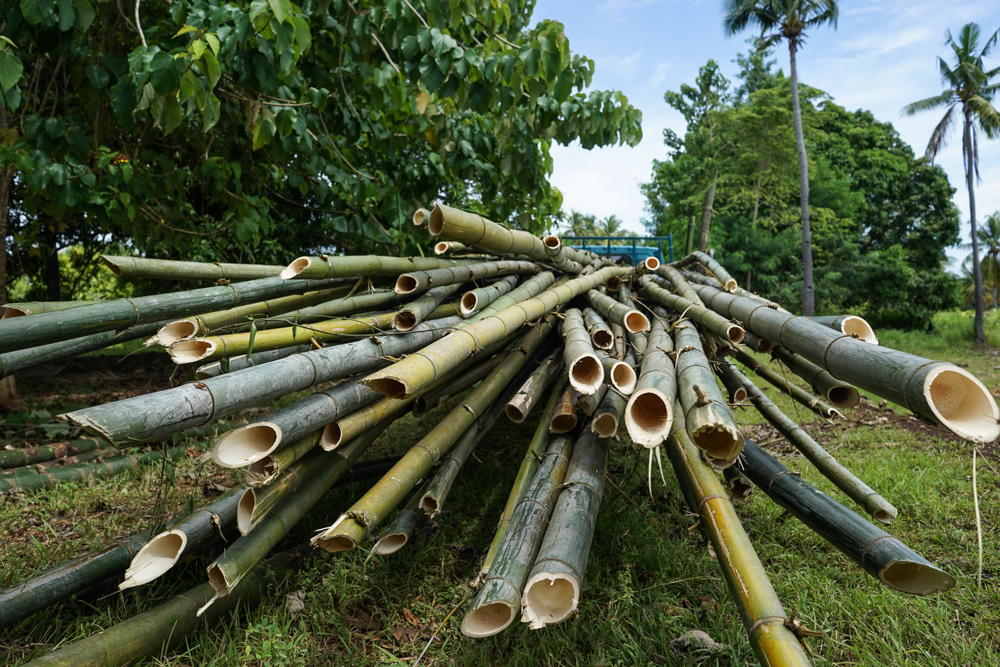
In a country increasingly dependent on non-wood forest products as timber supplies tighten, bamboo has become a practical stand-in for everything from furniture and handicrafts to panels and housing materials. It grows quickly, is widely available, and supports rural livelihoods.
The challenge begins after harvest, when it is exposed to fungi and insects that see it as an easy meal.
A study published in the Philippine Journal of Science by researchers from the Forest Products Research and Development Institute of the Department of Science and Technology examined how three commercially used bamboo species withstand decay and pest attacks under laboratory conditions, providing clues on how to make the grass a studier construction and raw material.
The species tested were kauayan-kiling (Bambusa vulgaris), bayog (Dendrocalamus merrillianus), and buho (Schizostachyum lumampao). While all are widely used in different industries, they vary in durability. Kauayan-kiling is fast-growing but more prone to insect attack due to its higher starch content. Bayog is valued for its strength and often used in engineered bamboo products. Buho is lighter and flexible, commonly used for weaving and low-load construction.
Against fungi, kauayan-kiling and bayog showed resistance to white rot and only moderate resistance to brown rot. Buho performed slightly better against white rot, ranging from resistant to highly resistant, though it still showed moderate susceptibility to brown rot.
In insect trials, drywood termites caused only slight damage across all species, with bayog showing more noticeable impact in its upper portion. Subterranean termites had minimal effect overall, particularly on buho. Powderpost beetles proved more destructive, with kauayan-kiling showing the most visible damage among the three.
The results point to clear variation in durability not just between species but within different sections of the same bamboo culm, underscoring that performance is not uniform from base to tip.
Researchers emphasize that even relatively resistant bamboo still requires chemical treatment, as its natural starch content continues to attract pests over time.
They also note that laboratory findings need to be validated through field exposure, where weather and environmental conditions further influence long-term performance.