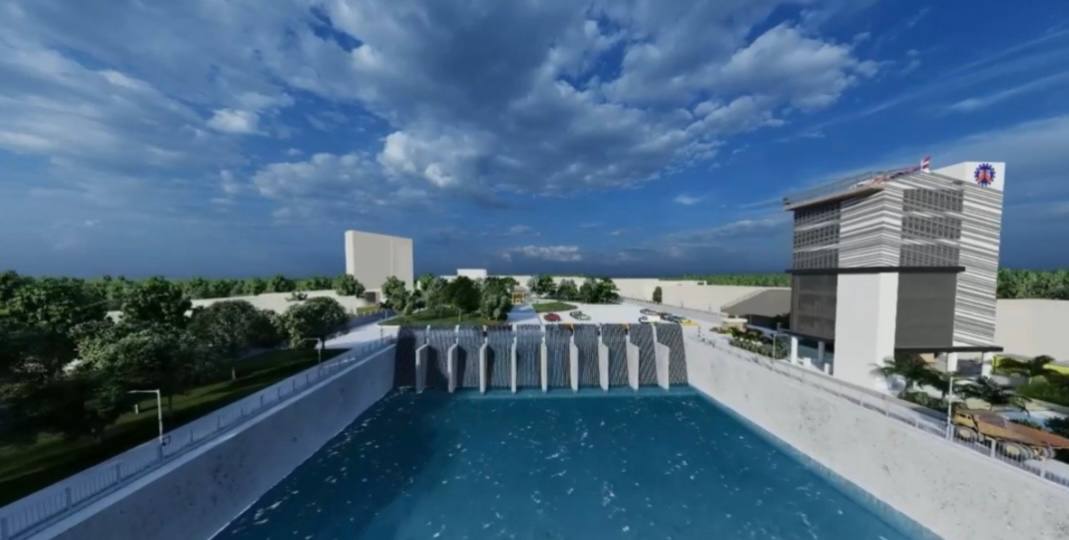
The government is pushing forward the long-delayed Parañaque Spillway Project, a proposed P90-billion infrastructure initiative that aims to do more than just control flooding by turning Laguna de Bay into a more productive fishing ground and a reliable freshwater source for Metro Manila and nearby provinces.
The Department of Agriculture and Laguna Lake Development Authority are leading the revival of the plan, which was first introduced in the 1970s. The 10.5-kilometer facility will run at least 50 meters underground to connect Laguna de Bay with Manila Bay, and construction is expected to take at least 10 years once it starts. The renewed effort shows that policymakers now see large water projects not just as flood control measures but as investments that can boost food security, improve water management, and strengthen the country’s ability to adapt to climate change.
Agriculture Secretary Francisco P. Tiu Laurel Jr. explained that the spillway will reduce repeated flooding in communities around the lake in Laguna, Rizal, and Metro Manila, while helping bring back the ecological balance of the country’s biggest freshwater lake. “Laguna de Bay is one of Metro Manila’s key food sources and our most affordable source of milkfish. If we improve water flow and manage floods better to restore the lake’s health, we can raise fish output, increase earnings for fisherfolk, and improve raw water quality, which may eventually bring down water treatment costs for consumers,” Tiu Laurel said.
The project still faces political and social challenges. Residents of Muntinlupa City, where water will be drawn from the lake, and Bacoor City, where excess water will flow out to Manila Bay, have long expressed worries about being forced out of their homes and the risk of flooding simply being moved from one area to another. LLDA General Manager Leopoldo Parumog noted the project has grown even more important with the upcoming Manggahan Control Gate Structure, a Japan-funded facility that will divert up to 2,400 cubic meters of floodwater per second—equal to one Olympic-sized swimming pool every second—from the Marikina River into Laguna de Bay to protect Metro Manila from severe floods. While this will ease flooding along the Marikina River, it will also raise water levels in Laguna de Bay and put lakeshore towns at greater risk unless more drainage capacity is added.
Tiu Laurel said his agency and the LLDA will work closely with the Department of Public Works and Highways, the Department of Environment and Natural Resources, local governments, and private groups to build understanding for the project and resolve the concerns of affected communities. “We need to show that this is not just another flood-control structure,” he added. “If planned and carried out properly, this is an investment in food security, climate readiness, and long-term water stability that will help millions of Filipinos.” The project’s advantages will also extend beyond lakeside towns. Water provider Maynilad already draws raw water from Laguna de Bay for millions of customers in Metro Manila and Cavite, including Muntinlupa and Bacoor. Officials believe better water movement and reduced pollution buildup will make the lake a more dependable water reserve while cutting long-term costs of treating water for household use.