The Philippine Exporters Confederation Inc. (Philexport) is urging businesses to strengthen contingency plans for water shortages, rising energy costs and supply disruptions as strong El Niño conditions are expected to persist into early 2027.
In a policy advisory released Oct. 26, Philexport cited an outlook from the Philippine Disaster Resilience Foundation (PDRF) indicating an over 83 percent probability that strong-to-very strong El Niño conditions will continue through January to March 2027. The state weather bureau also forecasts below-normal rainfall across much of the country from November through April, increasing the risk of widespread drought.
“Businesses are encouraged to strengthen preparedness measures and integrate climate-related risks into their operational planning,” the advisory said.
Philexport recommended that companies identify water-dependent operations, establish minimum water requirements, improve conservation measures and assess storage capacity. Businesses were also advised to arrange alternative suppliers and monitor water advisories for potential service interruptions.
Energy preparedness is another priority, with firms urged to improve efficiency, inspect backup generators, secure fuel supplies and account for potentially higher electricity and fuel expenses.
PDRF scenario estimates cited in the advisory indicate electricity demand could rise by 3 percent to 8 percent, while hydropower output could decline by 10 percent to 30 percent. The average Wholesale Electricity Spot Market price could increase by 22.7 percent, adding to operating-cost pressures.
To reduce supply-chain risks, Philexport urged businesses to monitor agricultural production and commodity prices, coordinate closely with suppliers, maintain contingency stocks and identify alternative sourcing options to limit shortages and delivery delays.
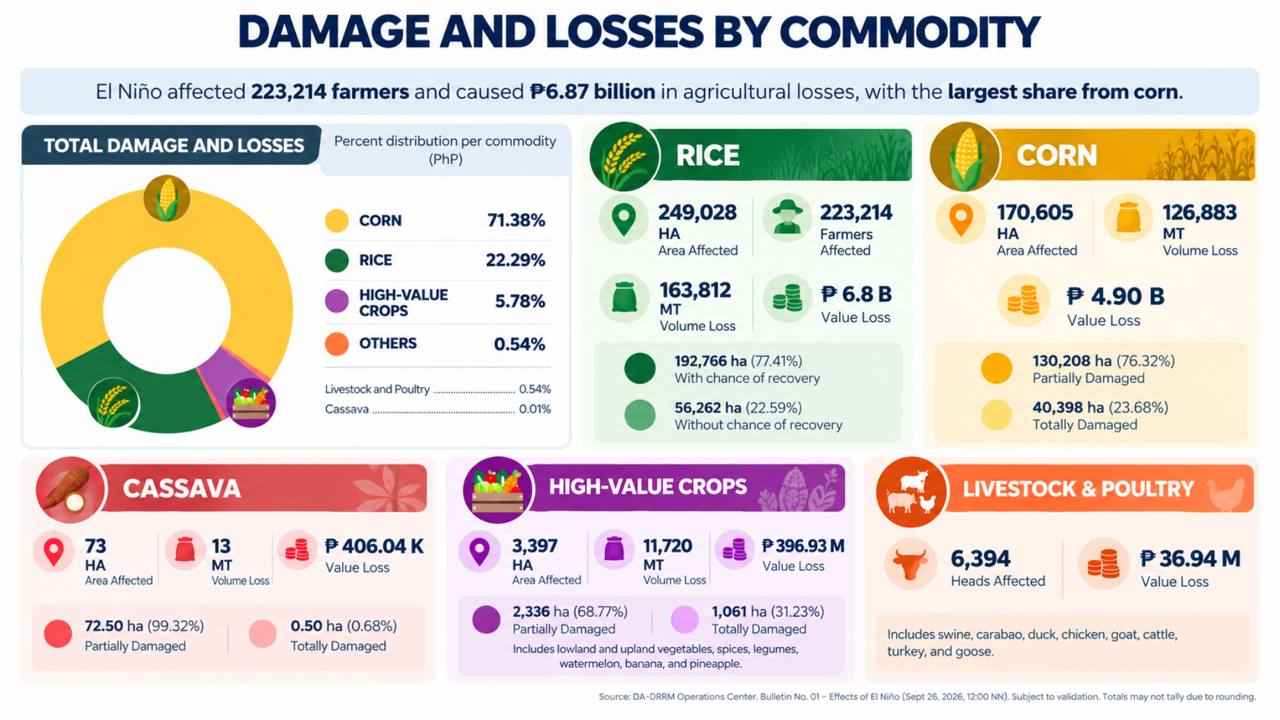
The advisory also cited data from the Department of Agriculture’s disaster risk reduction operations center showing that El Niño had affected 223,214 farmers, resulting in about P6.87 billion in agricultural damage and losses.
Philexport encouraged companies to track official updates on rainfall, drought, tropical cyclones and dam levels. It cautioned that cyclones may bring localized rainfall but are not guaranteed to compensate for broader rainfall deficits, underscoring the need for sustained preparedness.