What happens when illegal drugs leak into lakes and rivers? According to new research, fish do not just notice, they start behaving differently.
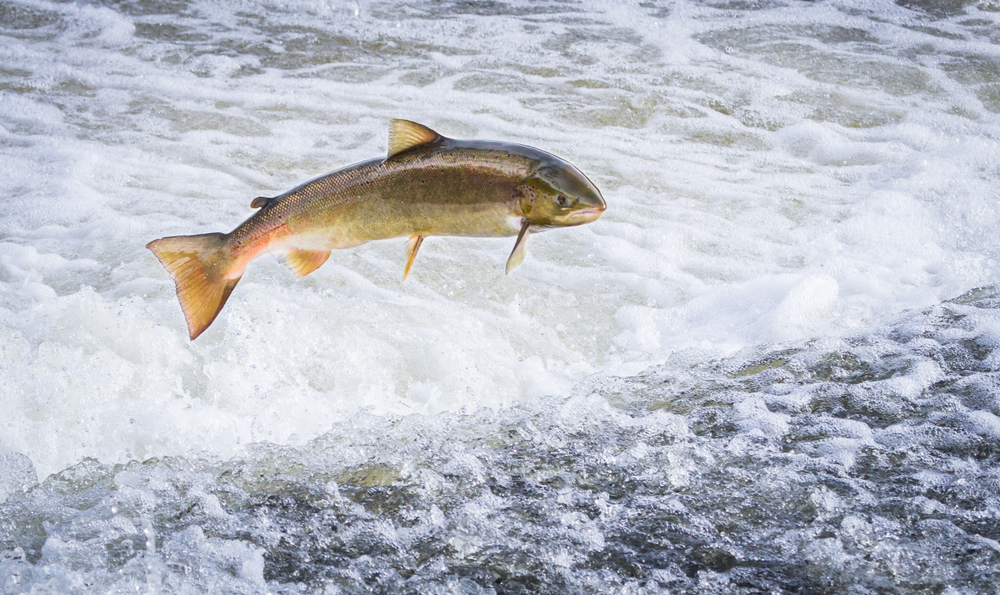
Scientists have found that cocaine pollution can significantly alter how fish move in the wild. The focus is on young Atlantic salmon, a species that relies on precise movement patterns to survive.
A multinational team, which was led by Jack A. Brand of the Swedish University of Agricultural Sciences, reported the findings in the study Cocaine pollution alters the movement and space use of Atlantic salmon in a large natural lake, published by Cell Press. Tracking fish in Sweden’s Lake Vättern using acoustic transmitters, the researchers monitored behavior in real-world conditions.
The real surprise is not cocaine itself, but what it turns into. Its main metabolite, benzoylecgonine, is more commonly found in aquatic environments and can linger longer than the original drug. In fact, it is often detected at higher concentrations in rivers and lakes. In this study, it also had a stronger effect on fish behavior than cocaine itself.
Fish exposed to this residue swam up to 1.9 times farther each week and drifted as much as 12 kilometers beyond their usual range. Scientists suspect this may be linked to how the compound affects the body. Research suggests benzoylecgonine can influence blood flow, stress levels, and energy use in animals, potentially pushing fish to move more while quietly draining their reserves.
That may sound like extra activity, but in nature, wandering comes with risks. Fish depend on carefully tuned movement to find food, avoid predators, and conserve energy. Too much roaming can upset that balance and reduce survival chances.
The study also notes that these observations capture only large-scale movement, meaning subtler behavioral changes may be happening beneath the surface. Future research will need more precise tracking to understand how deep these effects go.
With millions of people using illicit drugs each year, traces are continuously entering waterways through wastewater. Even at low levels, these chemicals can interact with biological systems shared across species.
The research findings are unsettling. Pollution is no longer just about plastics or oil. Sometimes, it is invisible, chemical, and capable of quietly rewiring how wildlife moves through the world.
Surely, new research will stem from this study to focus on implications on the global food system and human health.