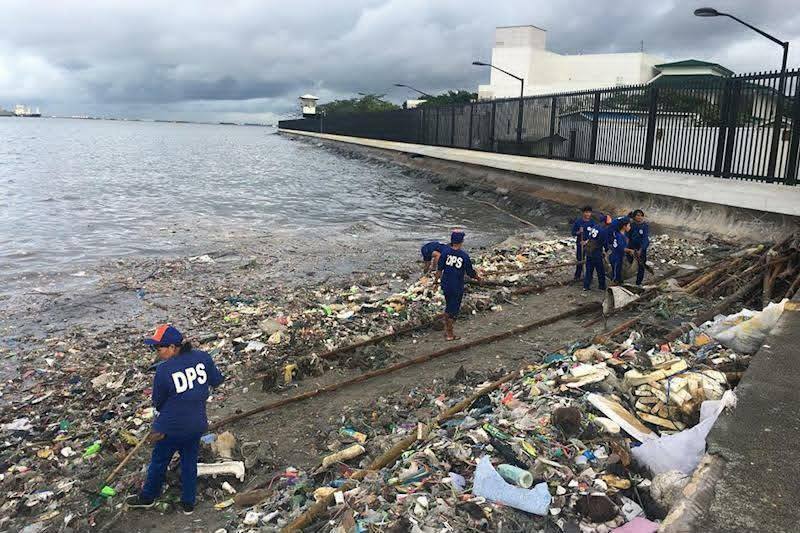
The Department of Environment and Natural Resources (DENR) is carrying out ongoing waterway cleanups as directed by President Ferdinand R. Marcos Jr., responding to massive garbage buildup in Metro Manila’s rivers and drainage systems during recent southwest monsoon rains. Even as these immediate efforts continue, the agency is prioritizing permanent, systemic changes to end the cycle of pollution rather than relying solely on clearing waste after it accumulates.
Environment Secretary Juan Miguel T. Cuna emphasized that lasting solutions depend on two key frameworks: the Extended Producer Responsibility (EPR) Act and the Philippine Ecosystem and Natural Capital Accounting System (PENCAS). He noted that solid waste management was once primarily the role of local government units, but new rules significantly expand private sector involvement, making producers directly accountable for the plastic waste they generate. Under Republic Act No. 11898, the 2022 EPR law, covered businesses must create programs to recover and divert plastic packaging waste, with a target of diverting 80 percent of such waste by 2028.
PENCAS supports these goals by establishing a clear, formal way to measure the true value of natural resources and the services ecosystems provide. By putting a precise value on nature, the system makes the real cost of environmental damage visible, creating a stronger deterrent against repeated violations and intentional misuse of waterways and other natural assets.
The DENR operates 196 trash traps across Metro Manila, with 1,500 Estero Rangers and River Warriors monitoring and clearing waterways. The Adopt-an-Estero Program also draws support from around 20 private companies, organizations, and government agencies, which take charge of specific waterways for regular cleanup, rehabilitation, and upkeep.
Secretary Cuna confirmed that while these operations are essential to address immediate risks, cleanup alone cannot resolve the country’s persistent waste crisis. True progress requires tackling the problem at its source and strengthening measures that prevent harm before it happens. Properly accounting for ecosystem value also ensures that environmental violations carry meaningful consequences, discouraging repeat offenses.
Together, EPR and PENCAS form a two-part long-term strategy: EPR stops waste at the origin by requiring producers to manage their plastic output, while PENCAS discourages harm by making the cost of destruction clear and measurable. Recent cleanup operations have underscored how urgently these broader measures are needed, and success will depend on shared commitment from government, industry, local communities, and the public. DENR’s ultimate goal is to move beyond constant, reactive cleaning and toward a system where improper waste management no longer poses a recurring threat to waterways, communities, and the environment.