The Philippines faces mounting risks to agricultural production, infrastructure and economic activity as coastal flooding intensifies, underscoring the need to integrate climate resilience into development planning and investment decisions, according to the Asian Development Bank’s (ADB) Asia–Pacific Climate Report 2026.
The report projected that Philippine cropland exposed to coastal flooding could increase by 66 percent to 1,656 square kilometers by 2050, from 998 square kilometers in 2020. The expansion could threaten agricultural productivity, disrupt rural livelihoods and compound food security challenges.
Metro Manila is also vulnerable. ADB identified Manila among major Asian coastal cities facing significant flood exposure, with 6.3 percent of its built-up area exposed to a coastal flood with a 1-in-100-year probability under present-day hazard conditions.
The risks extend beyond lower-income communities. The Philippines is among economies where coastal flooding could also affect wealthier areas, exposing higher-value properties, commercial districts and infrastructure investments to potential damage and disruption.
ADB further estimated that 38 percent of the country’s sandy coastlines could experience severe shoreline retreat by 2050, threatening coastal settlements, tourism activities and property development.
These projections carry economic implications for businesses and government alike. Damage to agricultural land and transport infrastructure could disrupt supply chains, while shoreline erosion and flooding may increase maintenance costs, weaken property values and raise the cost of developing coastal areas.
The government already directs an estimated 5 percent to 9 percent of public spending toward climate-related expenditures, primarily adaptation, according to the report. The Philippines is also among the region’s largest recipients of international public adaptation financing.
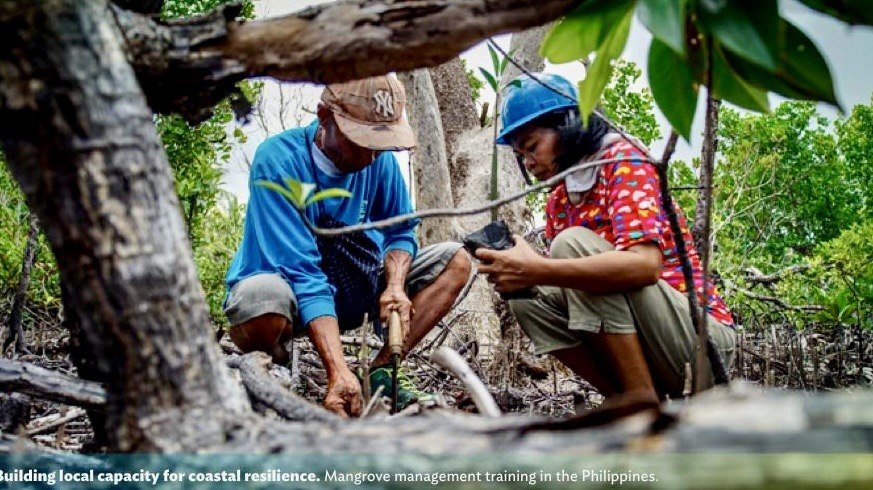
ADB cited its $500-million Marine Ecosystems for Blue Economy Development Program, which supports reforms in marine governance, natural capital accounting and coastal resilience financing.
However, financing alone may not be sufficient without stronger implementation and risk-informed planning. Incorporating flood projections into infrastructure design, land-use decisions and agricultural development could help limit future losses.
As coastal hazards intensify, the challenge for the Philippines will be to ensure that economic expansion and infrastructure investment account for long-term climate risks, protecting productive assets and vulnerable communities while strengthening resilience.