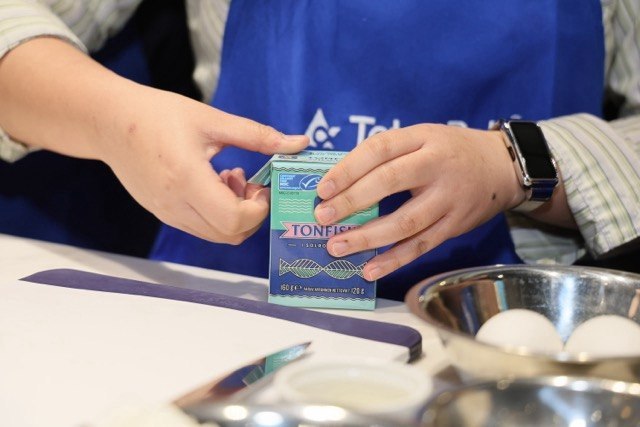
Tetra Pak’s paper-based carton technology could help Philippine tuna processors reduce packaging and logistics costs, strengthen export competitiveness and respond to growing demand for more sustainable food packaging.
The company is introducing its Tetra Recart technology to the Philippines following its commercial launch in Europe earlier this year, offering an alternative to conventional metal cans for shelf-stable tuna products.
The rectangular cartons are designed to improve storage, transport and retail-space efficiency, potentially helping processors manage distribution costs and develop differentiated products for international markets. However, actual savings will depend on production requirements, packaging costs and adoption across the supply chain.
The opportunity comes as the global shelf-stable tuna market is projected to expand by 12 percent to 12.4 billion units by 2030, creating potential for producers able to respond to changing consumer preferences and packaging requirements.
The Philippines exported 130,708 metric tons of tuna worth USD479 million in 2024, with canned products accounting for the largest share. The European Union remains a key destination, importing USD284.26 million worth of Philippine canned tuna that year and making the country the bloc’s fourth-largest supplier.
Packaging innovation could help local exporters maintain their position in established markets while exploring opportunities to differentiate products on sustainability. However, processors would need to assess compatibility with existing production lines, investment requirements and buyer acceptance before shifting significant volumes away from cans.
Tetra Pak said its carton packaging has an 85-percent lower carbon footprint than steel cans and 83-percent lower emissions than glass jars. The comparisons could strengthen the technology’s appeal as food manufacturers face increasing pressure to account for packaging-related environmental impacts, although results depend on assessment boundaries and product life-cycle conditions.
Larry Tobias, Tetra Pak’s business development director for Malaysia, Singapore, the Philippines and Indonesia, said meeting international sustainability requirements would be important to the industry’s expansion.
“Converting suitable tuna products from cans and glass jars to cartons can help Philippine producers strengthen their export offer and support the industry’s long-term, sustainable growth,” Tobias said.
The technology’s commercial impact will ultimately depend on whether processors can translate packaging efficiencies and environmental benefits into competitive pricing and stronger demand from overseas buyers.