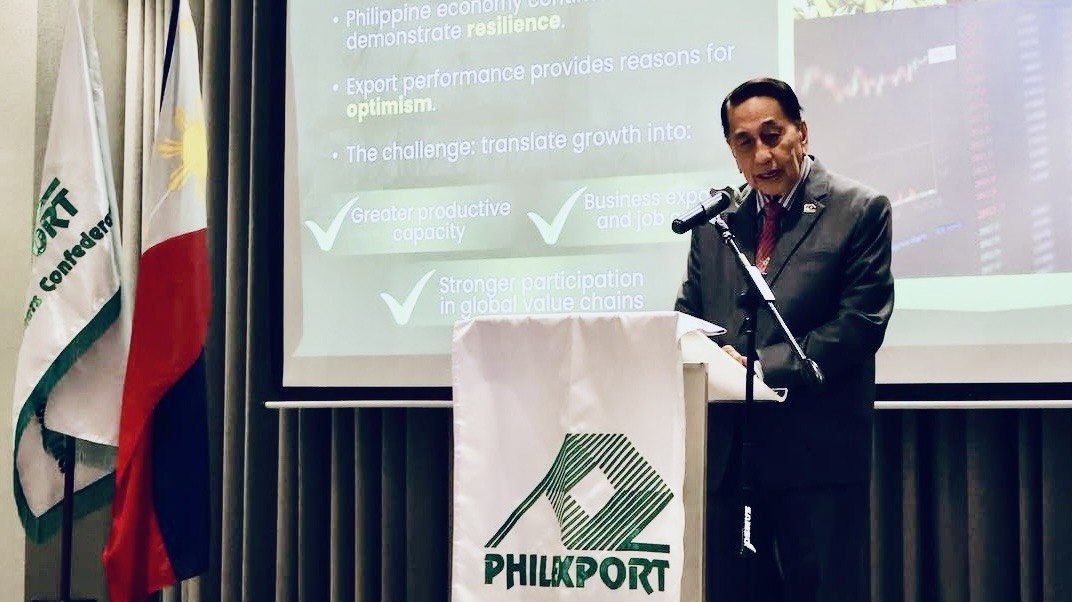
The Philippines must do more than sign trade deals—it must help smaller businesses turn them into export sales, Philippine Exporters Confederation Inc. (PhilExport) President Sergio Ortiz-Luis Jr. said.
Speaking at PhilExport’s fourth-quarter general membership meeting, Ortiz-Luis urged the government to make trade agreements work for micro, small and medium enterprises (MSMEs) through better access to financing, certifications, logistics and foreign buyers.
“We therefore need to move from trade agreement to trade utilization,” he said.
The challenge is turning paper access into paying customers. Smaller exporters often struggle with compliance costs, shipment expenses and demanding overseas market requirements, leaving them less equipped to capitalize on trade preferences.
Ortiz-Luis said MSMEs must play a bigger role in diversifying Philippine exports, which remain heavily concentrated in electronics and a limited number of markets.
He called for tighter coordination among government export agencies, industry associations, logistics providers and financial institutions to help smaller firms break into global markets.
“For a small enterprise, one certification, one shipment, one failed order, one delayed payment can make a major difference,” he said.
He also proposed a single-submission system for government trade documents to cut repetitive paperwork and lower compliance costs.
Other priorities include cheaper electricity, more efficient logistics, workforce development and help meeting tougher international sustainability standards—all critical to keeping smaller exporters competitive.
The push comes as Ortiz-Luis sees room for stronger export performance despite geopolitical tensions and supply chain uncertainty.
Citing strong merchandise shipments in August, he said Philippine merchandise exports could hit or surpass $100 billion this year.
“It will not be a surprise that we can reach and even surpass the $100 billion mark this year,” he said.
But a record export tally would tell only part of the story. The bigger test is whether more Filipino businesses can win overseas orders, meet global standards and turn market access into sustained growth.