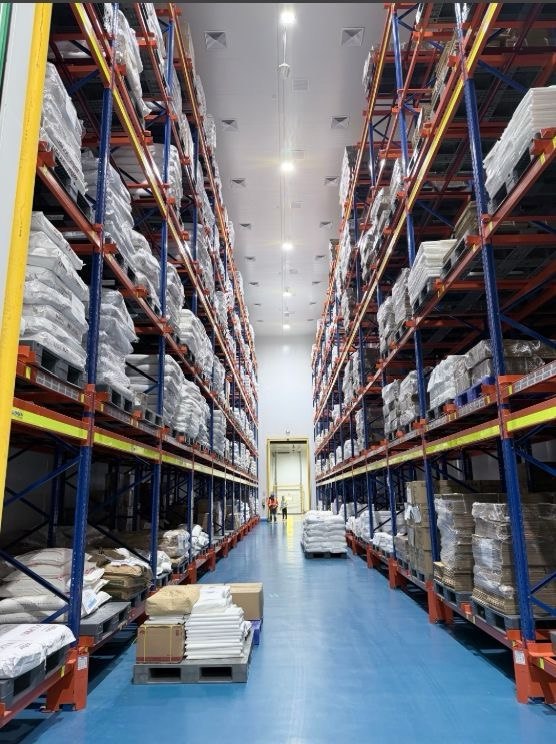
The Jollibee Group has set a new benchmark for sustainable manufacturing after its Danao Commissary in Cebu became the first manufacturing facility in the Philippines to receive LEED certification for Interior Design and Construction (ID+C), signaling that industrial plants can pursue ambitious environmental goals without sacrificing operational efficiency.
The milestone comes as manufacturers increasingly face pressure from investors, regulators and global customers to reduce carbon emissions and improve resource efficiency across their operations.
Global real estate and investment management firm JLL served as the project’s LEED consultant and sustainability adviser, helping the 18,000-square-meter food manufacturing facility achieve LEED Gold certification in May 2026 under the LEED v4.1 ID+C: Commercial Interiors rating system.
The certification was particularly notable because no standard LEED pathway exists for manufacturing interiors.
JLL worked with the Green Business Certification Inc. (GBCI) to develop an appropriate certification approach while overseeing commissioning, energy modeling, renewable energy studies and sustainability measures that were integrated into the facility’s engineering design from the outset.
The project delivered measurable environmental gains, including an 82.1 percent reduction in energy costs and greenhouse gas emissions, a 76.95 percent cut in indoor water consumption and the diversion of 99.38 percent of construction waste from landfills. It also received high scores for energy efficiency, water management, material selection, indoor environmental quality and innovation.
Beyond the certification, the project underscores a broader shift in Philippine manufacturing, where sustainability is increasingly viewed as a driver of operational resilience and long-term competitiveness rather than simply a compliance requirement.
JLL said the Danao Commissary demonstrates that even energy-intensive industrial facilities can meet globally recognized green-building standards through early planning and close collaboration.
The achievement provides a template for manufacturers looking to lower operating costs, reduce their environmental footprint and strengthen their position in global supply chains that increasingly reward sustainable production practices.